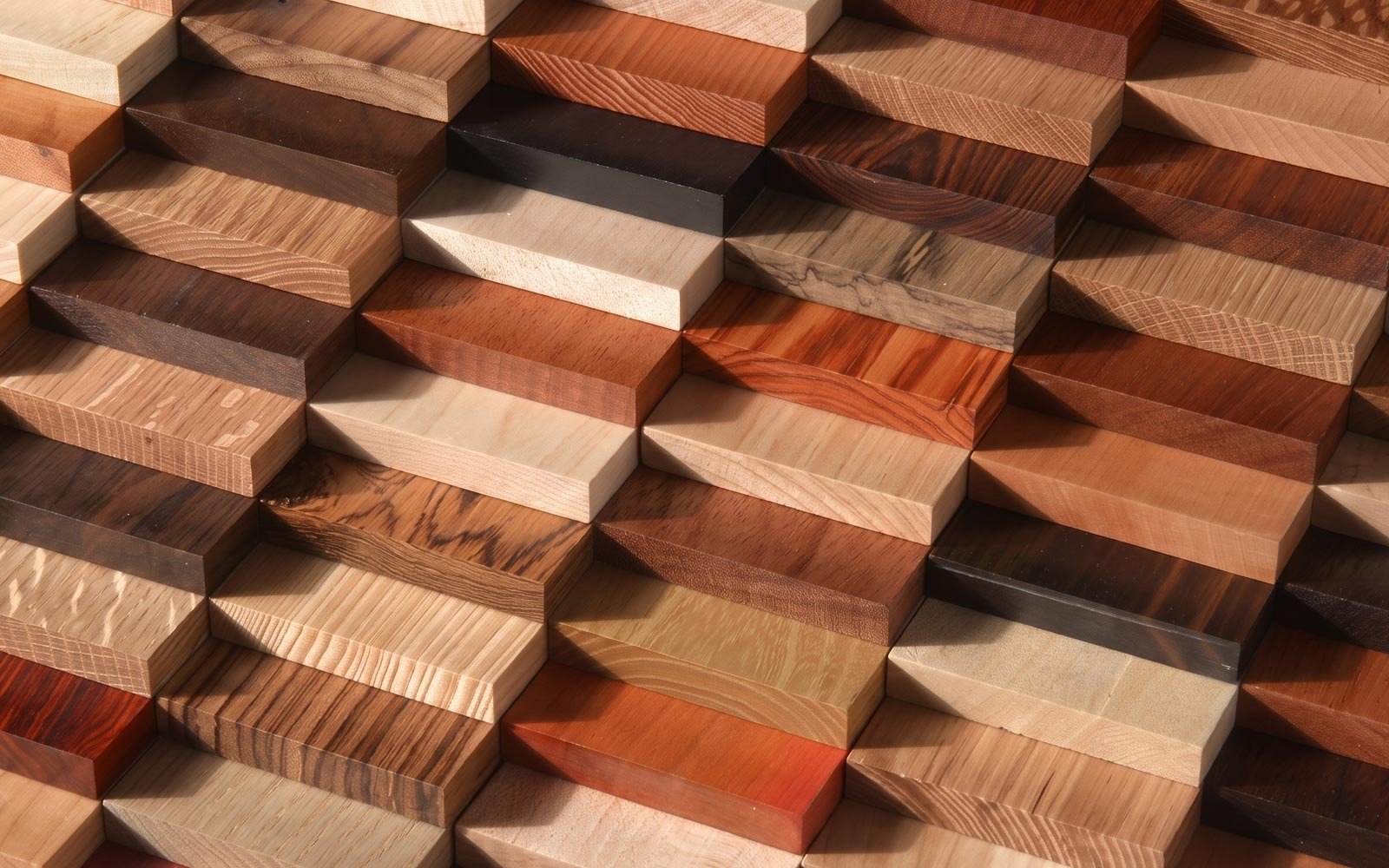
The best wood for solid wood furniture depends on your daily lifestyle, desired grain pattern, and design aesthetic. For maximum scratch resistance and busy family dining rooms, Hickory, Northern Red Oak, and Quarter-Sawn White Oak offer unmatched durability and textured grain that disguises everyday wear. If you prefer a sleek, smooth surface that showcases rich stain colors evenly, Brown Maple, Hard Maple, and Cherry deliver refined elegance.
Investing in authentic, Amish-crafted solid wood furniture means buying pieces built to last for generations rather than replacing mass-produced particleboard every few years. Because every hardwood species carries its own density, grain character, and stain absorption profile, choosing the right timber is the most important decision you will make when customizing a dining set, bedroom suite, or living room centerpiece.
Why Does Wood Species Matter When Buying Solid Wood Furniture?
Unlike engineered wood products covered in thin synthetic veneers, solid North American hardwood is organic, dense, and structurally consistent from surface to core. Selecting the right wood species directly shapes four essential qualities of your furniture:
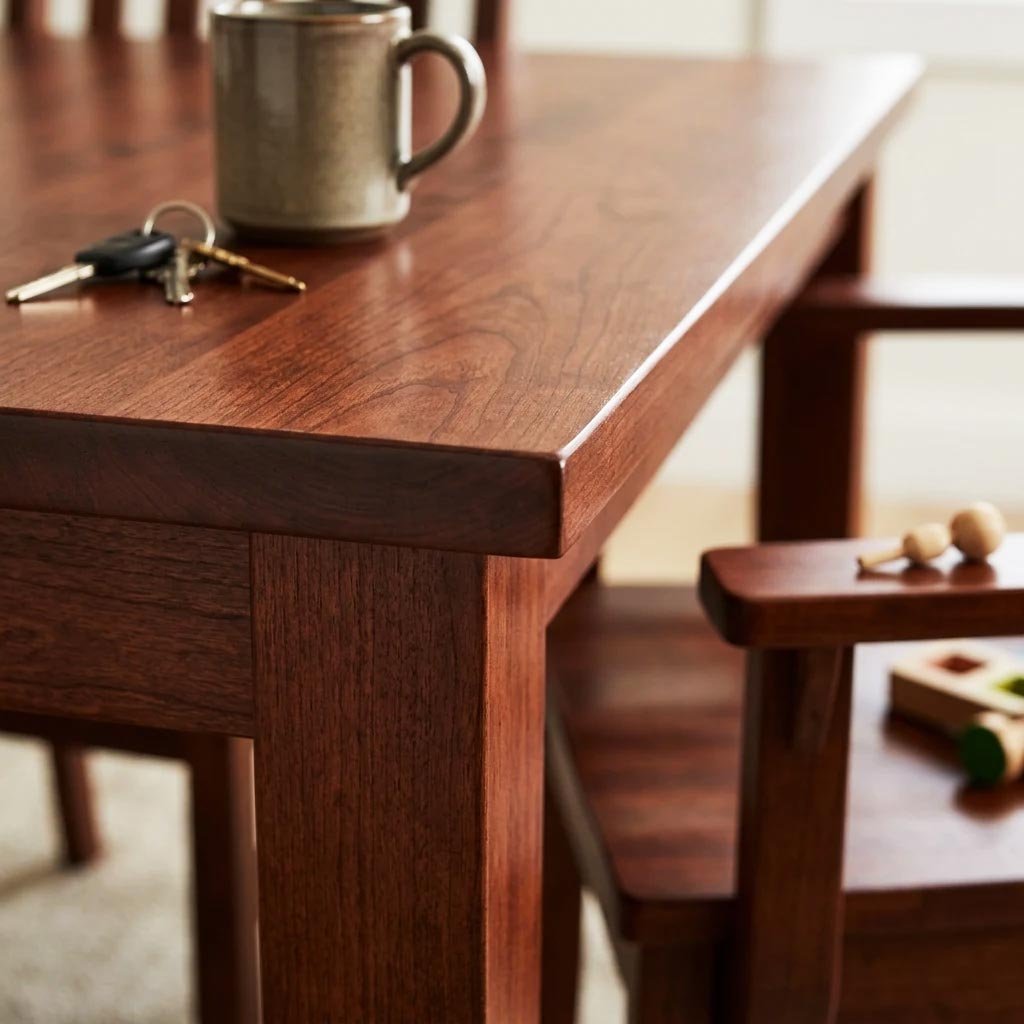
Surface Hardness and Dent Resistance
Measured on the industry-standard Janka Hardness Scale, denser woods resist dents, dings, and pet scratches far better than softer woods.

Grain Texture and Visual Movement
Open-grained woods (like Oak) feature pronounced, tactile cathedral patterns, while closed-grain woods (like Maple and Cherry) feel glass-smooth to the touch.
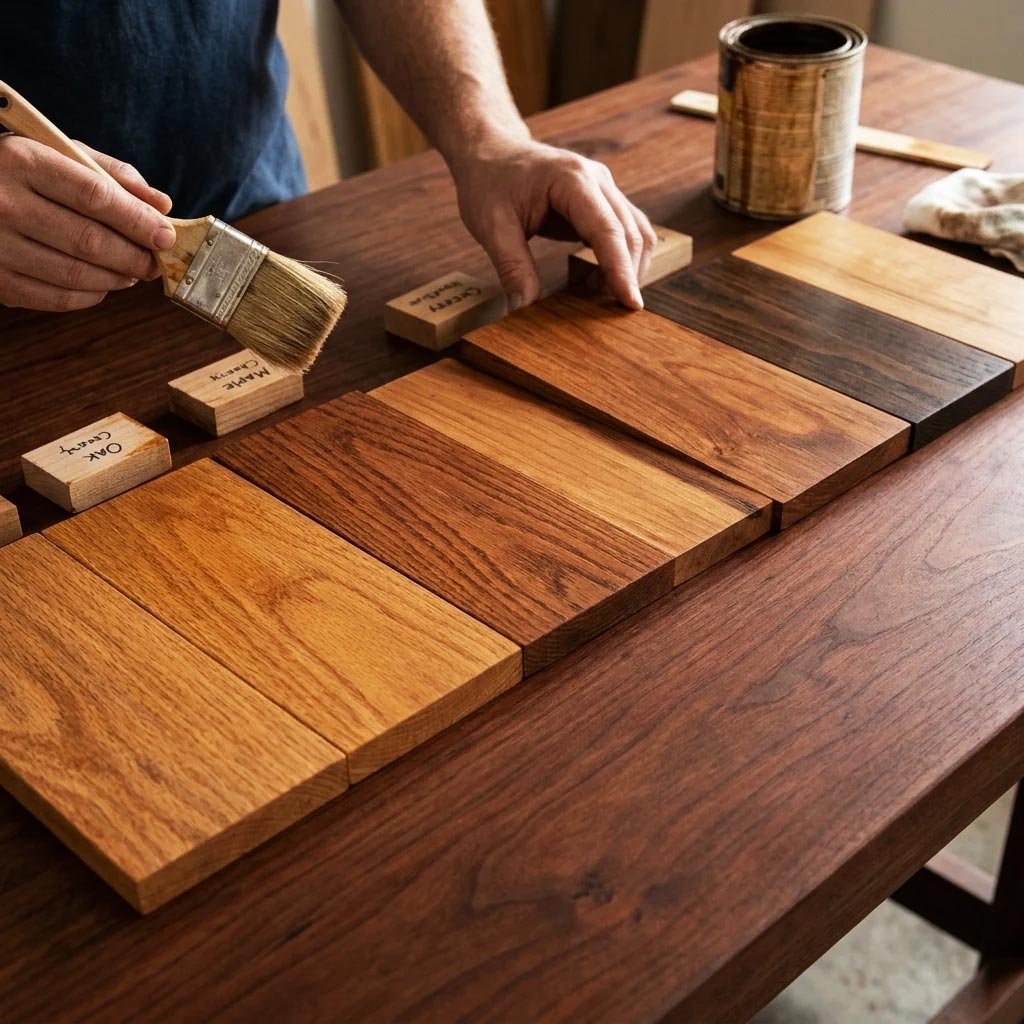
Stain Absorption and Undertones
Each wood species reacts differently to Ohio Certified Stains (OCS). A medium brown stain applied to Cherry produces warm, reddish-amber undertones, while the exact same stain on Maple yields a crisp, neutral brown.
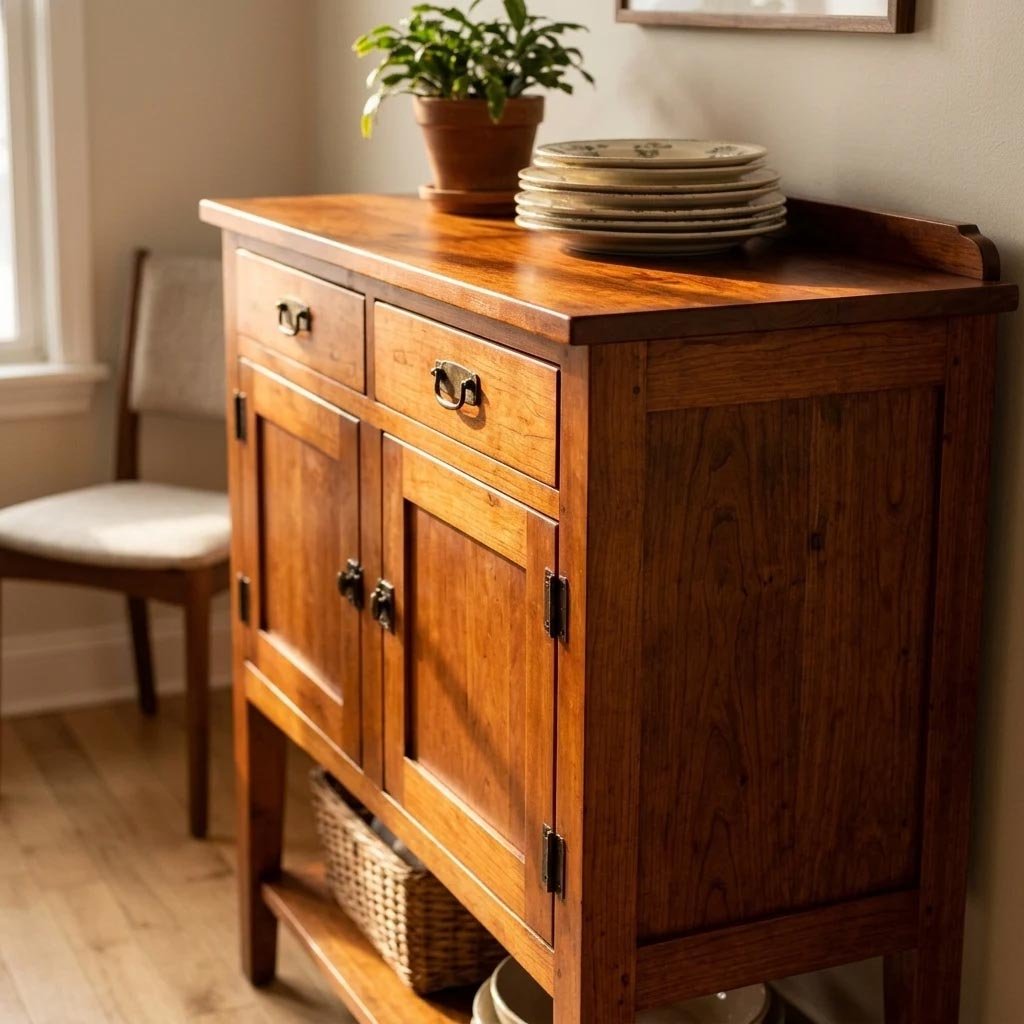
Natural Aging and Patina
Real hardwood responds to natural light over time—some species subtly mellow, while others, like Cherry, deepen dramatically into richer hues over the years.
Comparing the Best Wood for Solid Wood Furniture
Use this side-by-side reference guide to compare the most popular North American hardwoods used in handcrafted Amish furniture:
| Wood Species | Janka Hardness Rating | Grain Pattern | Natural Color & Undertone | Best Design Styles |
|---|---|---|---|---|
| Hickory | 1,820 lbf (Hardest) | Bold, dramatic, varied | Creamy white sapwood to deep brown heartwood | Rustic, Farmhouse, Lodge, Transitional |
| Hard Maple | 1,450 lbf | Very fine, tight, uniform | Creamy off-white with subtle golden warmth | Modern, Contemporary, Scandinavian |
| Quarter-Sawn White Oak | 1,360 lbf | Tight with signature ray fleck (“tiger stripes”) | Warm golden-tan to olive-brown undertones | Craftsman, Mission, Modern Organic |
| Northern Red Oak | 1,290 lbf | Prominent, open, arched cathedral grain | Light warm tan with subtle pinkish-red hue | Traditional, Country, Classic Family Homes |
| Black Walnut | 1,010 lbf | Straight to gently swirling | Rich chocolate brown to purplish-brown | Mid-Century Modern, Luxury Contemporary |
| Cherry | 950 lbf | Smooth, fine, straight with occasional pin knots | Light pinkish-tan that darkens to deep reddish-brown | Traditional, Shaker, Transitional, Formal |
| Brown Maple | ~950 lbf | Smooth, closed, even | Mix of creamy white and warm tan-brown streaks | Transitional, Painted Finishes, Modern Farmhouse |
A Complete Guide to the Best Hardwood Species for Furniture
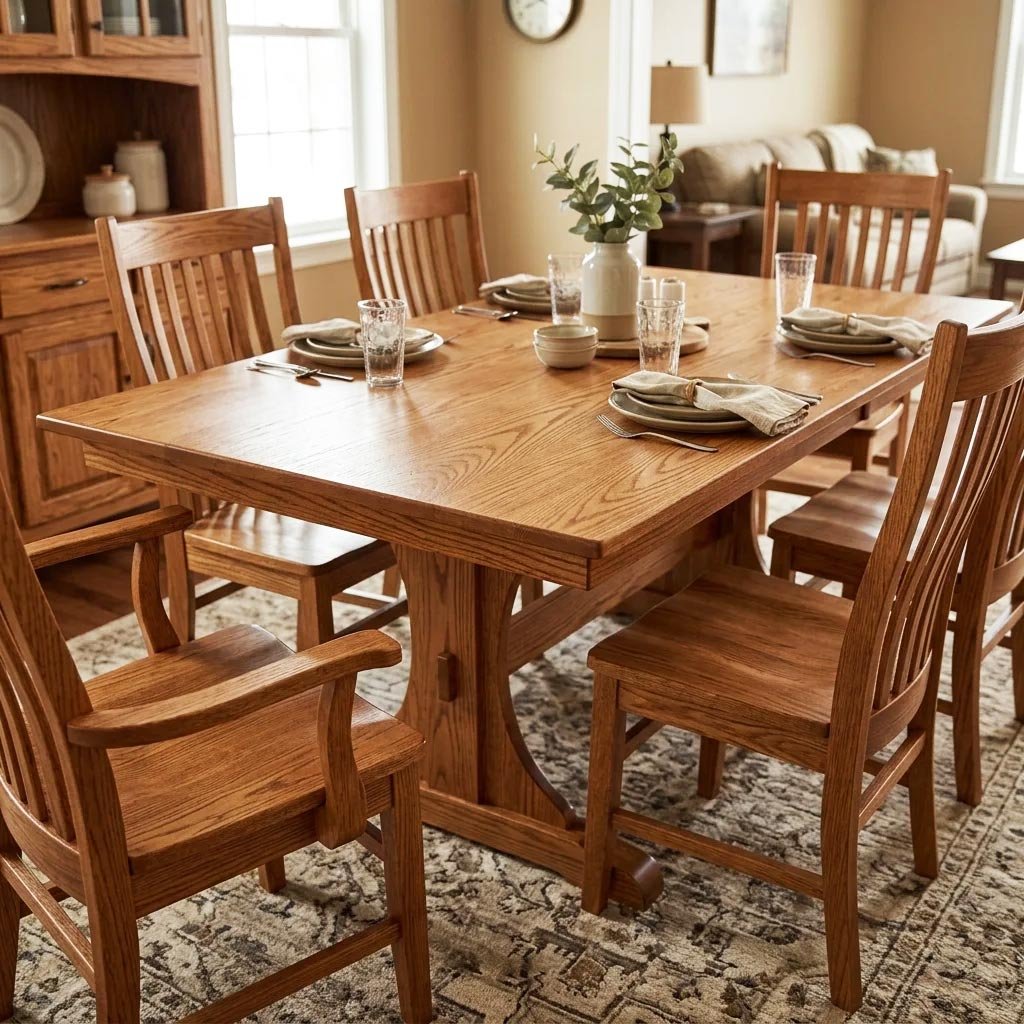
Northern Red Oak: The Timeless, Family-Friendly Classic
Northern Red Oak is the benchmark of American solid wood furniture, prized for its strength, availability, and unmistakable grain character. Featuring a Janka hardness rating of 1,290 lbf, Red Oak stands up effortlessly to daily family meals, homework sessions, and heavy use.
Key Benefits: Its pronounced, open grain pattern naturally camouflages minor surface scratches and dings, making it one of the most forgiving woods for households with young children or active pets.
Stain & Finish Performance: Red Oak absorbs stains deeply and evenly, showcasing dramatic contrast between its darker grain lines and lighter background fibers.
Best Used For: Everyday kitchen and dining room tables, sturdy dining chairs, kids’ furniture, and traditional bedroom suites.
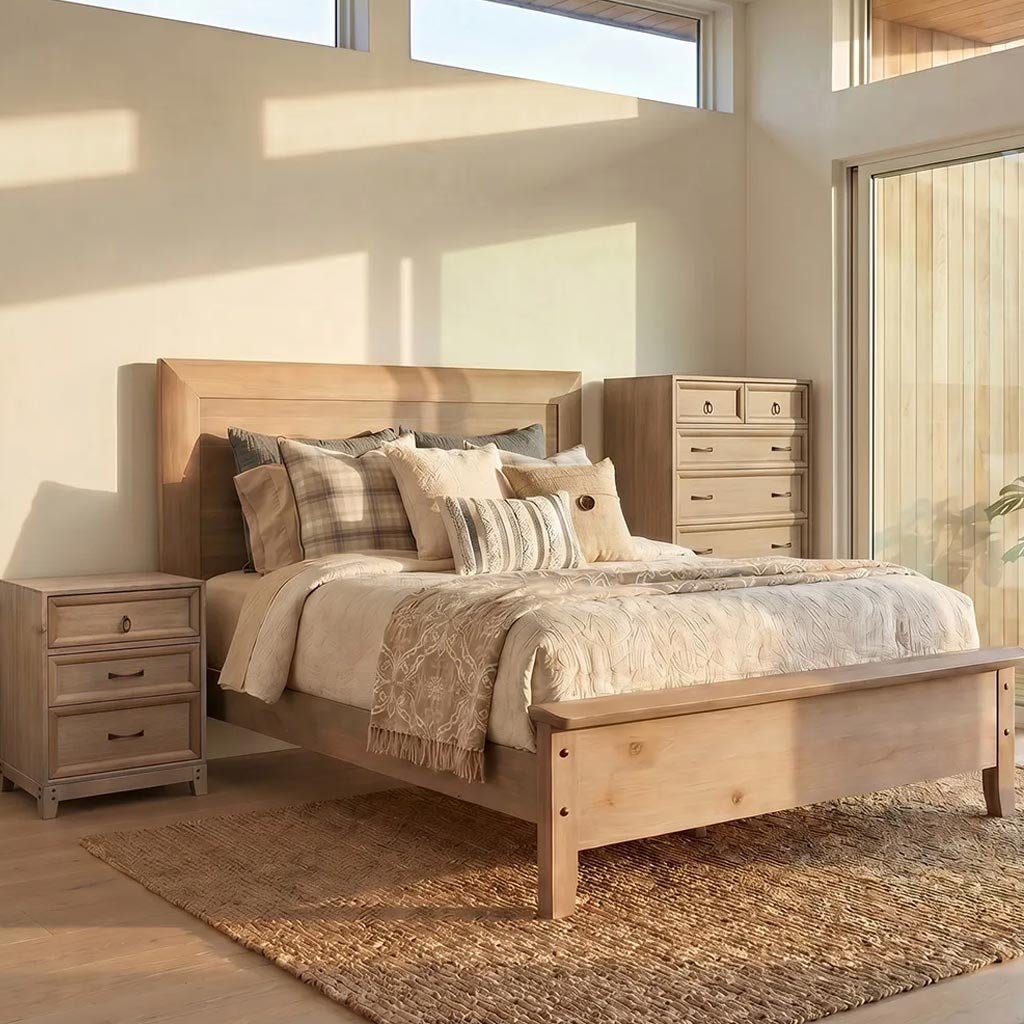
Quarter-Sawn White Oak: Heirloom Craftsmanship & Superior Stability
Quarter-Sawn White Oak comes from cutting white oak logs at a 90-degree angle to the growth rings rather than slicing straight across (plain-sawn). This specialized milling technique reveals striking medullary rays—often called “ray fleck” or “tiger striping”—that shimmer subtly as light moves across the surface.
Key Benefits: With a Janka rating of 1,360 lbf and a closed-cell cellular structure, White Oak is naturally water-resistant and exceptionally resistant to warping, cupping, or seasonal humidity swings.
Stain & Finish Performance: Quarter-Sawn White Oak looks extraordinary in warm honey, mission, and earthy brown tones that highlight its three-dimensional ray patterns.
Best Used For: Heirloom dining tables, Mission and Craftsman-style living room pieces, and modern organic interiors.
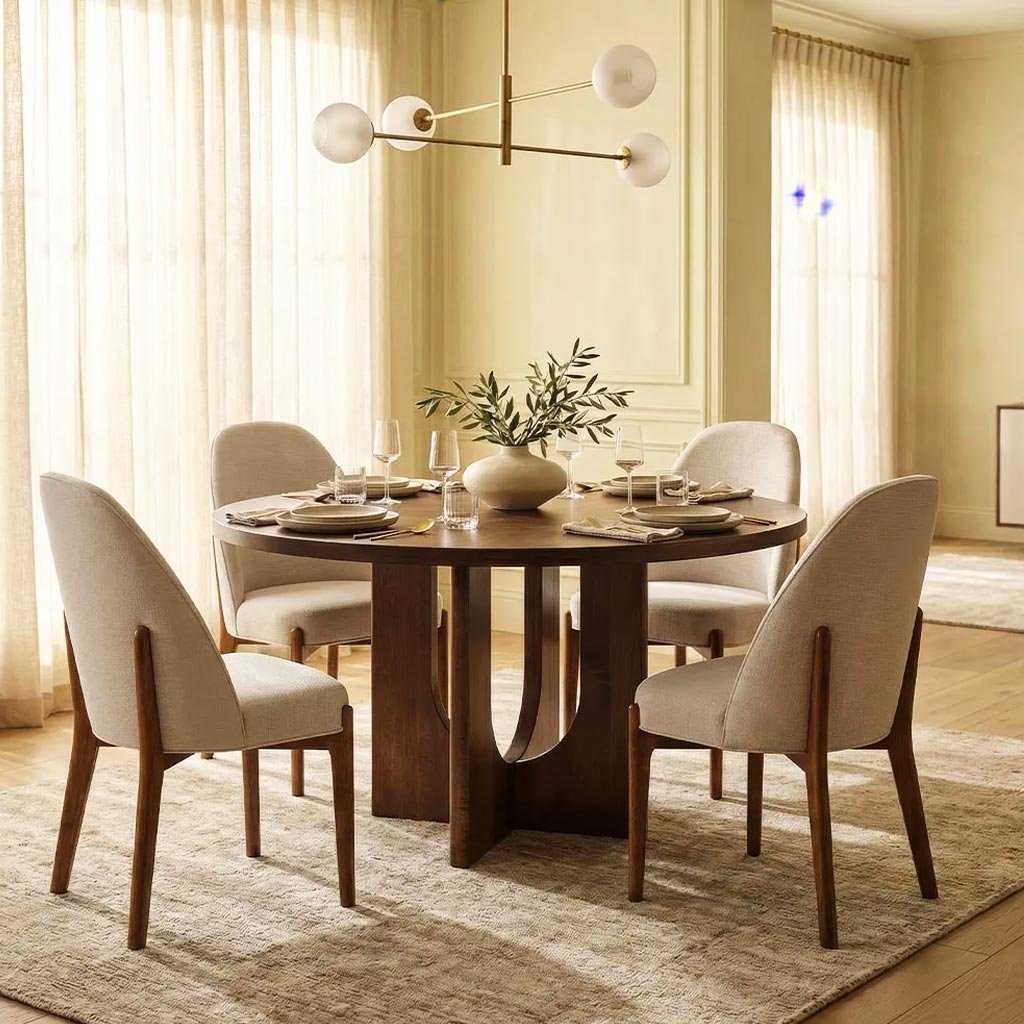
Hard Maple & Brown Maple: Smooth, Sleek, and Versatile
When homeowners want clean lines without heavy wood grain, Maple is the premier choice. While both varieties share a tight, closed grain that sands to a silky-smooth finish, they offer distinct advantages depending on your budget and finish preference:
Hard Maple (1,450 lbf): Exceptionally dense and pale, Hard Maple is ideal for light, natural finishes, butcher-block-style tops, and contemporary furniture that demands superior dent resistance.
Brown Maple (~950 lbf): Harvested from the darker heartwood of soft maple trees, Brown Maple offers the exact same glass-smooth texture at a more accessible price point. Because it lacks heavy grain pores, Brown Maple is the top choice for rich espresso stains, modern gray/slate tones, and smooth painted finishes.
Best Used For: Transitional bedroom sets, sleek dining tables, painted cabinetry, and modern home office desks.
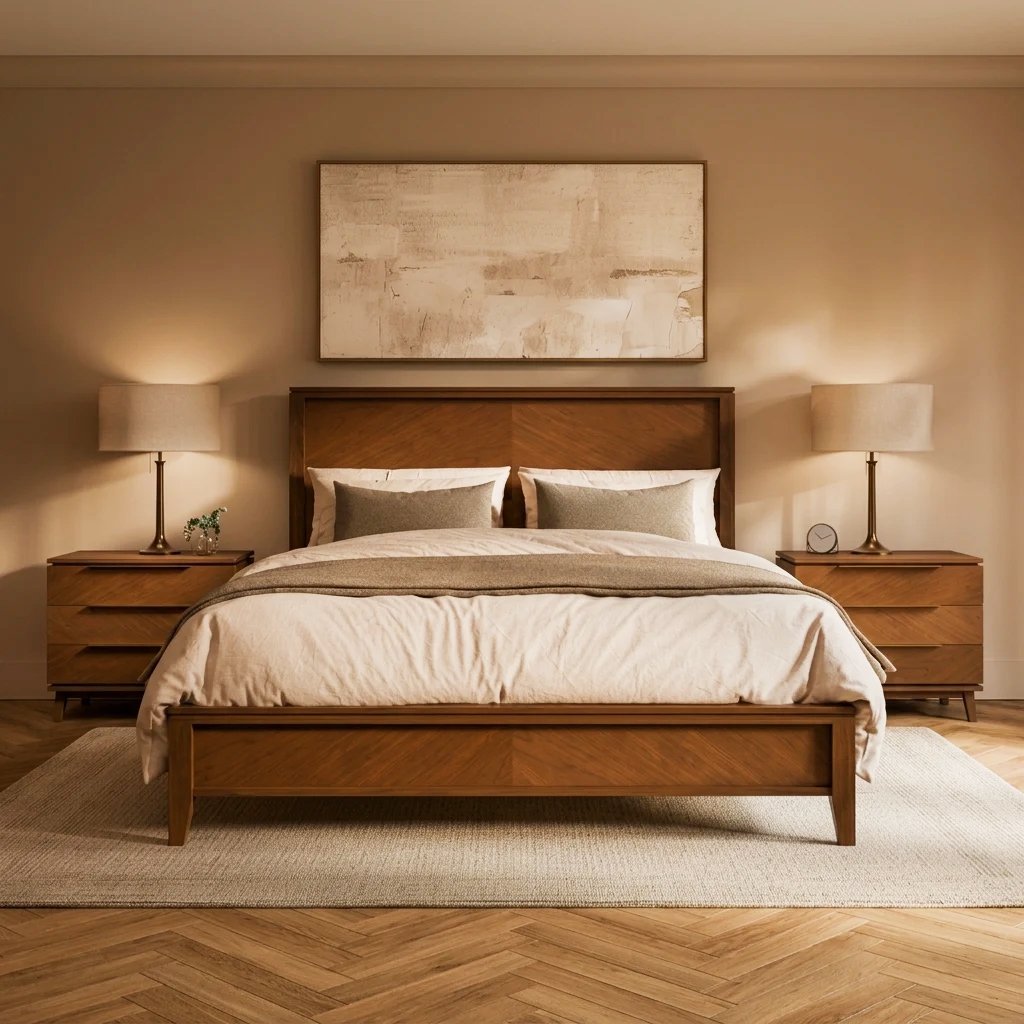
American Black Cherry: Rich Warmth That Ages Gracefully
Cherry has long been celebrated by fine furniture makers for its lustrous, satin-smooth texture and unmistakable warmth. Freshly milled Cherry starts as a soft pinkish-tan, and over the course of months and years of exposure to indoor light, it naturally oxidizes into a deep, glowing reddish-amber patina.
Key Benefits: Cherry offers a refined, understated elegance that elevates formal dining rooms and master bedrooms. Small, natural mineral streaks and tiny pin knots are hallmarks of genuine solid Cherry rather than defects.
Stain & Finish Performance: Whether finished in a clear natural coat or a rich warm stain, Cherry radiates depth and sophistication without relying on heavy grain texture.
Best Used For: Master bedroom suites, formal dining sets, Shaker-inspired storage pieces, and heirloom chests.
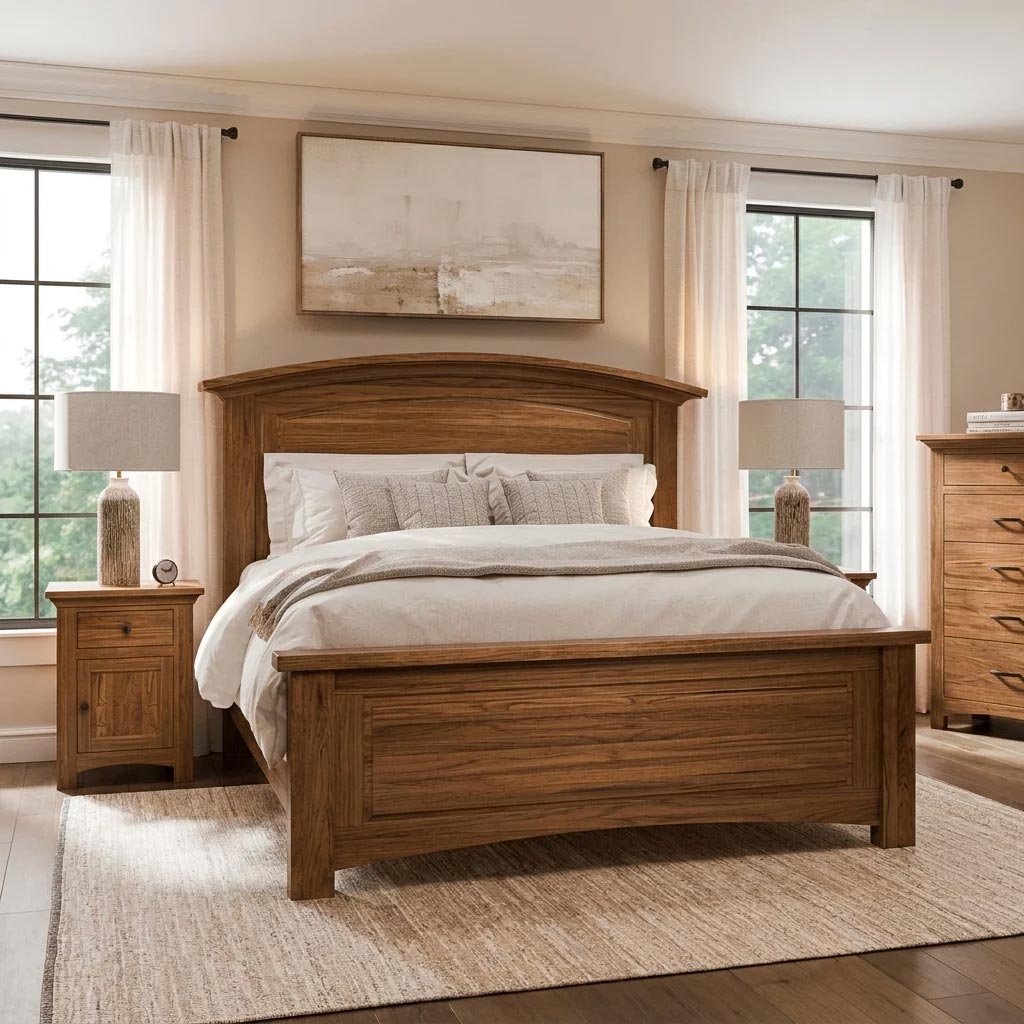
Hickory: Maximum Durability & Bold Rustic Character
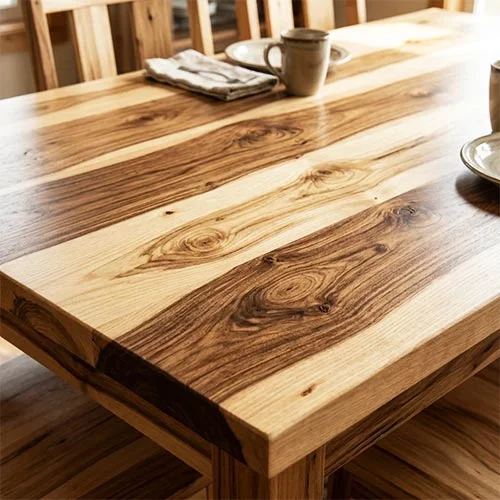
With a Janka hardness rating of 1,820 lbf, Hickory is the hardest, strongest, and most shock-resistant domestic wood used in residential furniture. Visually, Hickory is famous for its dramatic color contrast, blending creamy white sapwood directly alongside deep, rich brown heartwood on the very same plank.
Key Benefits: Hickory is virtually indestructible in everyday home environments. If you want a dining table or bench that can withstand decades of heavy wear without showing its age, Hickory is unmatched.
Stain & Finish Performance: Clear natural finishes celebrate Hickory’s bold, two-tone character, while medium-to-dark stains harmonize the contrast between light and dark boards for a cohesive look.
Best Used For: High-traffic family dining tables, rustic farmhouse benches, mudroom storage, and statement living room tables.
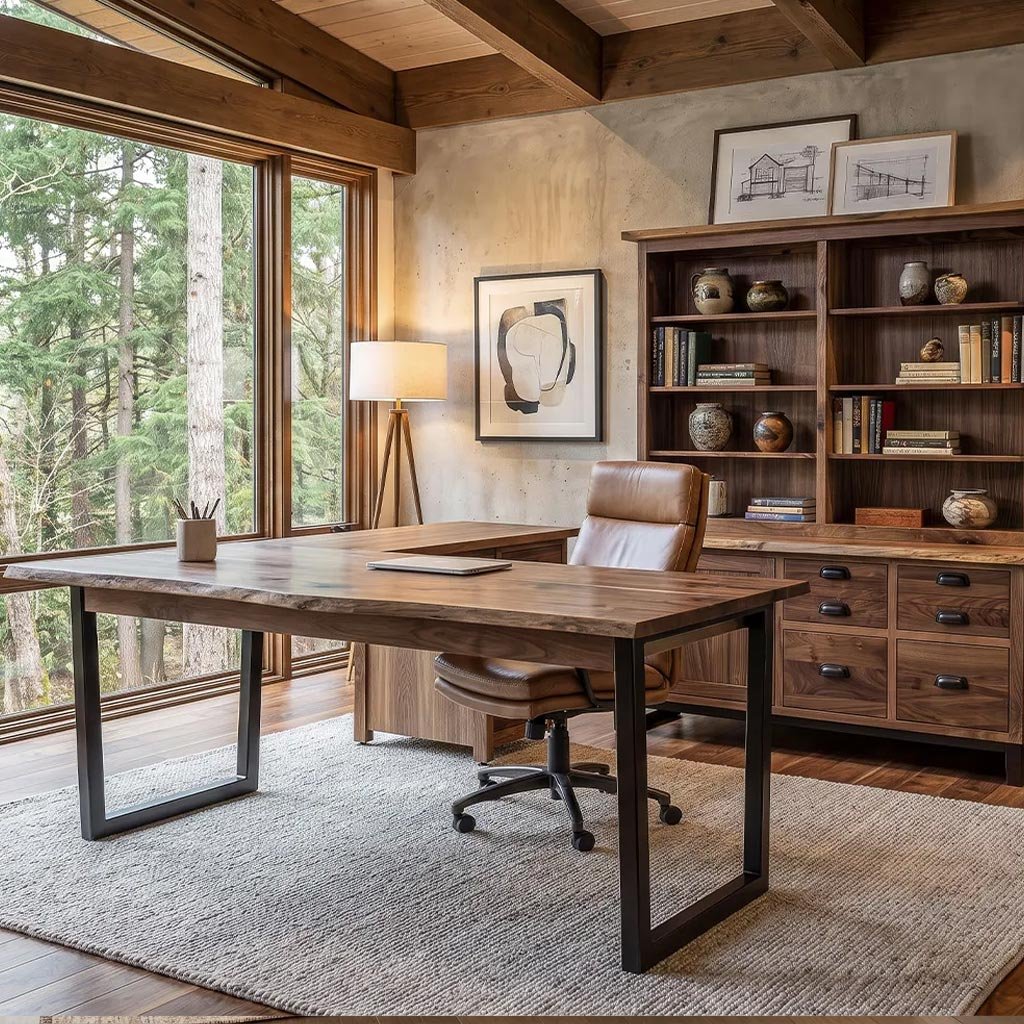
Black Walnut: Luxury Modern Elegance
Black Walnut is the crown jewel of North American hardwoods. Treasured for its naturally dark chocolate-brown heartwood, subtle purplish undertones, and graceful grain patterns, Walnut brings effortless luxury to both mid-century modern and contemporary spaces.
Key Benefits: Because Walnut is naturally dark all the way through the wood, minor surface scuffs are far less noticeable than they would be on a dark-stained light wood.
Stain & Finish Performance: Most homeowners choose a clear natural conversion varnish on Walnut to preserve its authentic, rich color variations without artificial dyes.
Best Used For: Statement dining tables, live-edge pieces, executive office desks, and contemporary bedroom furniture.
How to Choose the Right Wood Species for Your Room and Lifestyle
If you are torn between two or three wood species, narrow down your choice by answering three practical questions:
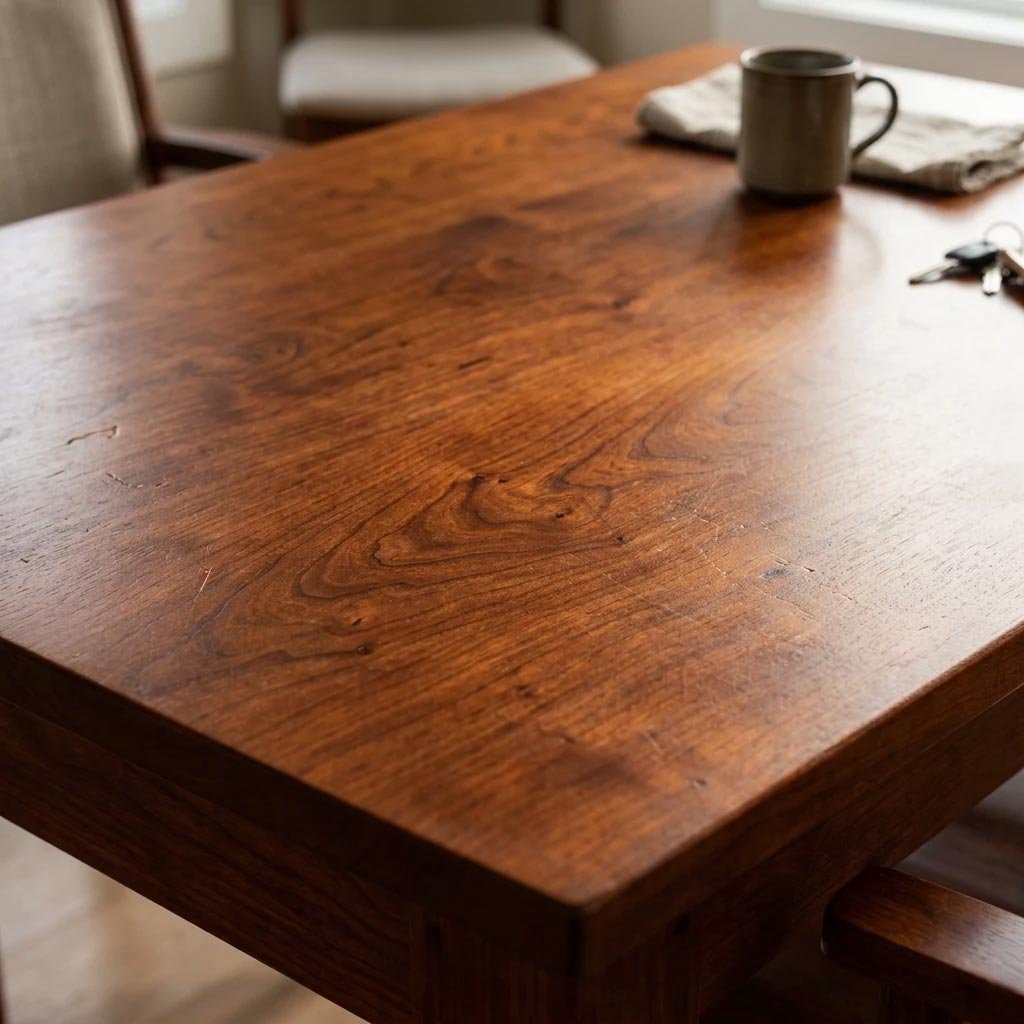
How much daily wear will the piece see?
For kitchen tables, breakfast nooks, and kids’ rooms where spills, toys, and heavy dishware are part of daily life, prioritize Hickory, Northern Red Oak, or Quarter-Sawn White Oak. For master bedrooms or accent pieces that experience lighter surface impact, Cherry, Brown Maple, or Black Walnut perform beautifully.
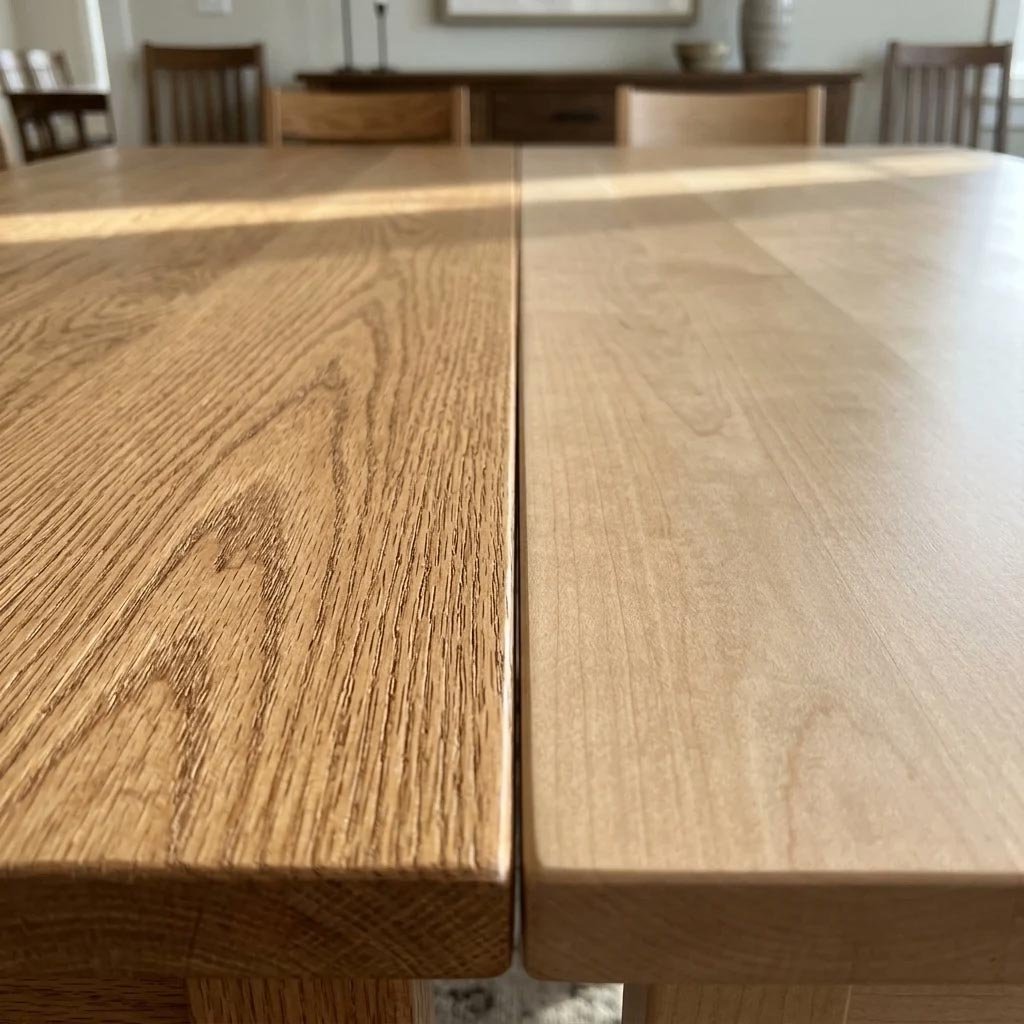
Do you want to feel the wood grain or prefer a smooth surface?
Run your hand across a wood sample. If you love tactile, organic wood texture, choose Red Oak, Quarter-Sawn White Oak, or Hickory. If you want a sleek, uninterrupted tabletop that feels smooth under a placemat or writing pad, choose Brown Maple, Hard Maple, or Cherry.
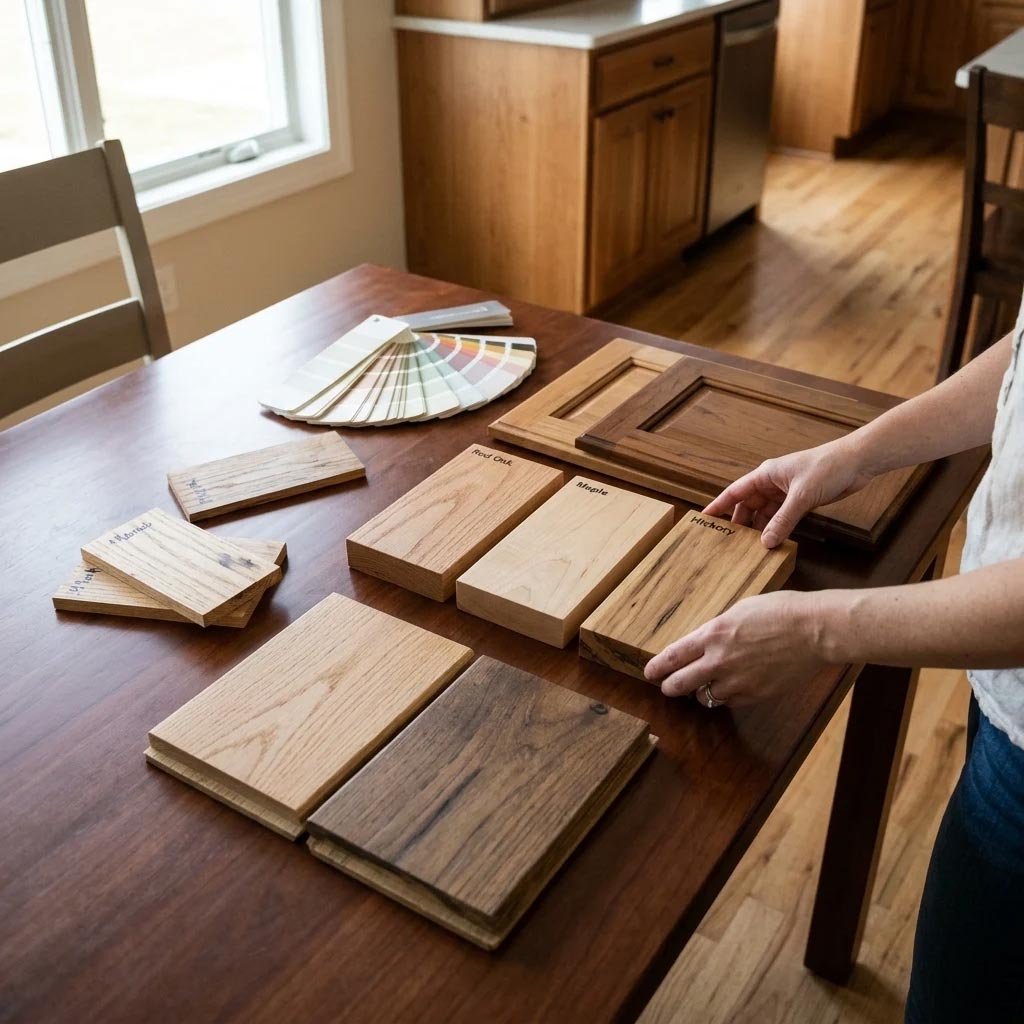
What are your existing flooring and cabinetry tones?
You do not need your furniture to match your hardwood floors identically—in fact, subtle contrast prevents a room from looking flat. Pair light oak floors with rich Walnut or medium-stained Cherry, or balance dark flooring with natural Quarter-Sawn White Oak or light Hard Maple.
See and Feel Real Hardwood Samples at Miller’s Furniture in Ohio
Photos on a screen can only tell half the story when selecting solid wood furniture. Seeing grain movement under natural lighting, testing drawer glides, and comparing actual Ohio Certified Stain (OCS) swatches side by side makes choosing the right species effortless.
At Miller’s Furniture, every indoor piece is individually bench-built by skilled Amish craftsmen from sustainably harvested North American hardwoods and protected with durable, catalyzed conversion varnish. Our showroom design consultants will walk you through wood samples, stain colors, and hardware options across all three of our Ohio locations:

The Pataskala Showroom
Conveniently located just east of the Columbus I-270 bypass on York Road, our Pataskala location is the primary hub for shoppers searching for high-end custom furniture and Amish dining sets near Columbus.
📍 Pataskala Showroom:
4877 York Rd SW, Pataskala, OH 43062
Get Directions to Pataskala
📞 Phone: (740) 927-4090
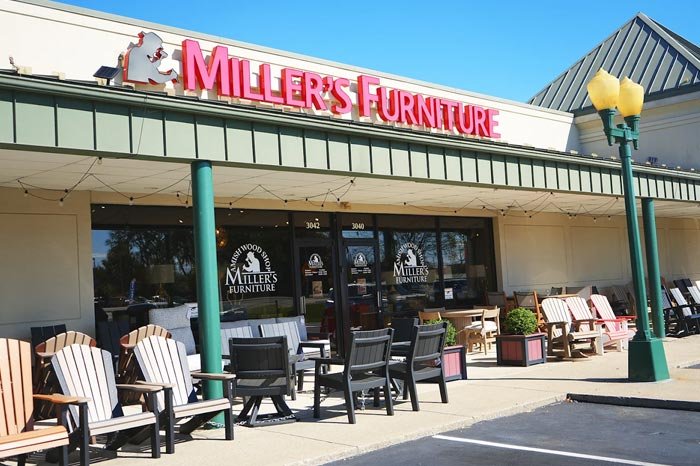
The Lancaster Showroom
Situated on Columbus-Lancaster Road, this expansive showroom features beautifully staged bedroom suites, office collections, and living room seating options designed to elevate your home.
📍 Lancaster Showroom:
3040 Columbus-Lancaster Rd NW, Lancaster, OH 43130
Get Directions to Lancaster
📞 Phone: (740) 654-6852
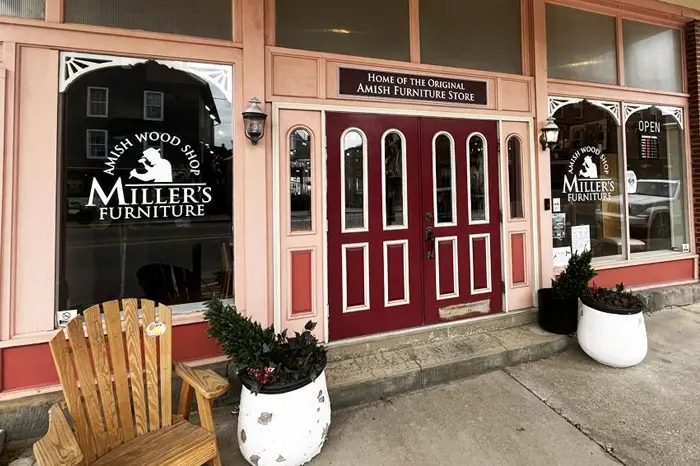
The Loudonville Showroom
Located on West Main Street right in the heart of Mohican country, our Loudonville storefront showcases rustic log furniture, traditional hardwoods, and heavy timber pieces alongside our core home decor lines.
📍 Loudonville Showroom:
268 W Main St, Loudonville, OH 44842
Get Directions to Loudonville
📞 Phone: (419) 994-5595
FAQs
Frequently Asked Questions About Solid Wood Furniture Species
What is the most durable wood for a dining room table?
Hickory (1,820 Janka rating), Hard Maple (1,450 Janka rating), Quarter-Sawn White Oak (1,360 Janka rating), and Northern Red Oak (1,290 Janka rating) are the most durable domestic woods for dining tables. Among these, Red Oak and Quarter-Sawn White Oak are especially popular for busy families because their distinct grain patterns naturally disguise minor scuffs and scratches over decades of use.
What is the difference between Red Oak and Quarter-Sawn White Oak?
Northern Red Oak is typically plain-sawn, producing bold, arched cathedral grain patterns with warm tan and subtle pinkish undertones. Quarter-Sawn White Oak is milled at a 90-degree angle to the tree’s growth rings, creating tighter vertical grain lines accented by shimmering medullary rays (“tiger striping”), olive-
Can you mix different wood species in the same room?
Yes, mixing wood species creates depth and designer-level warmth when done intentionally. The easiest way to mix woods successfully is to keep undertones consistent (for example, pairing warm Cherry with warm Quarter-Sawn White Oak) or to use one wood as a dominant anchor piece and introduce a contrasting wood—such as pairing a dark Black Walnut dining table with lighter Maple or painted chairs.
Why is solid wood furniture better than veneer or engineered wood?
Solid hardwood furniture lasts for decades and can be sanded, repaired, or refinished if damaged. Engineered furniture made with MDF or particleboard wrapped in thin paper or wood veneer cannot be refinished once chipped, swells when exposed to moisture, and loosens at the joints over time. Authentic Amish solid wood pieces use mortise-and-tenon joinery and dovetail drawers built to remain structurally sound for generations.
How does conversion varnish protect solid wood furniture?
All handcrafted indoor pieces at Miller’s Furniture are finished with an industrial-grade catalyzed conversion varnish applied over Ohio Certified Stains. Unlike standard store-bought lacquers or waxes, conversion varnish cures into a cross-linked, moisture-resistant shield that protects against water rings, heat, household spills, and daily wear without requiring constant re-waxing.
Do I need an appointment to customize wood species at Miller’s Furniture?
No appointment is necessary. You are welcome to walk into our Lancaster, Pataskala, or Loudonville showrooms anytime during regular business hours to explore floor models, compare hardwood boards, and work with our team to customize your exact dimensions, wood species, stain color, and hardware.