Mortise and Tenon joinery
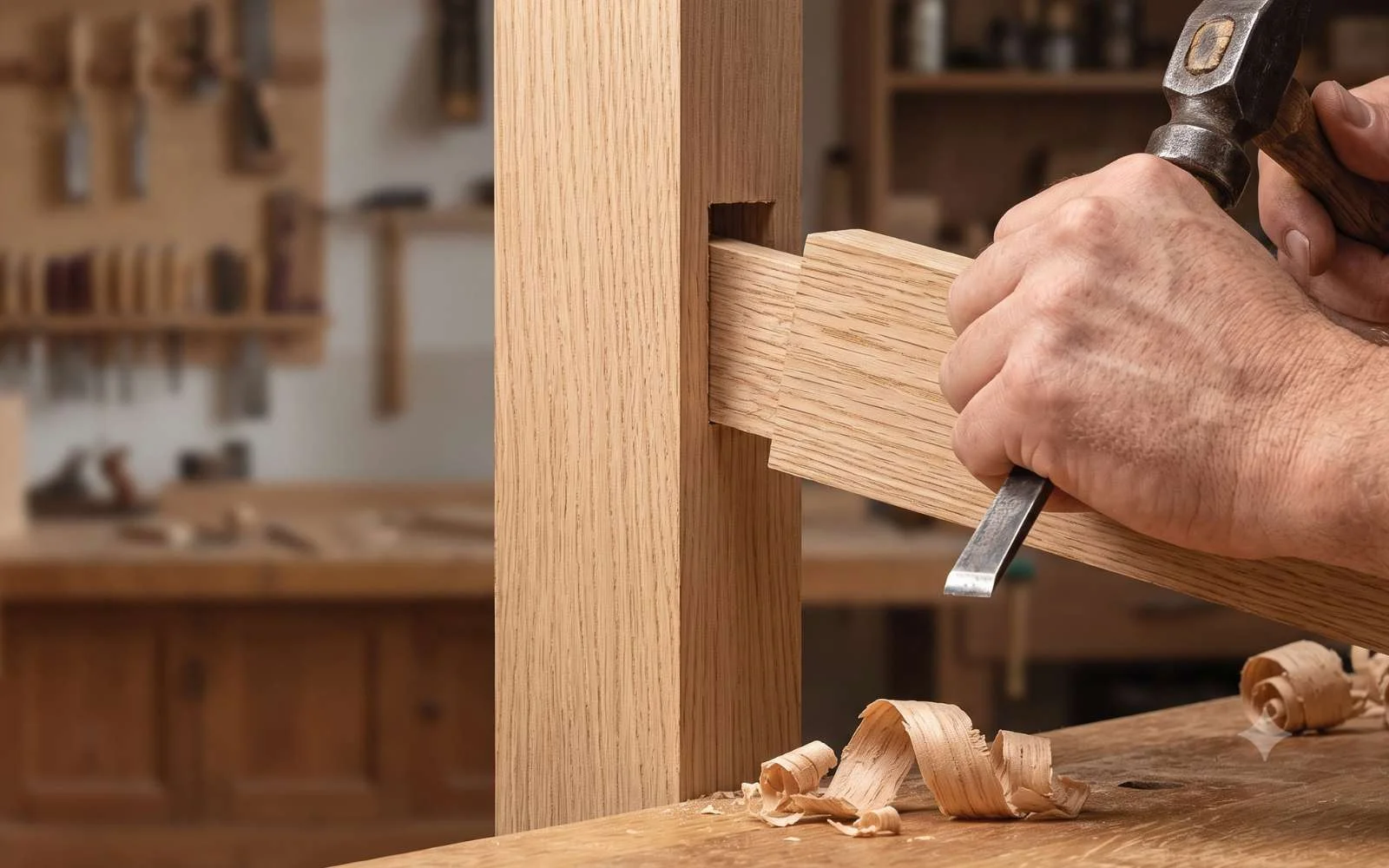
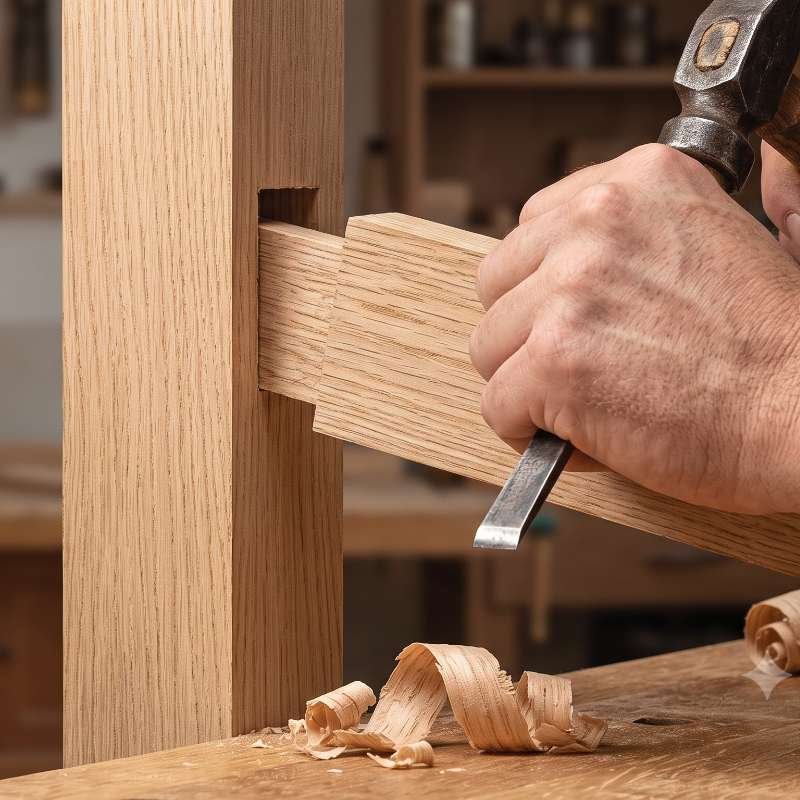
Mortise and Tenon joinery is an ancient, time-tested woodworking technique where two pieces of wood connect at a 90 degree angle
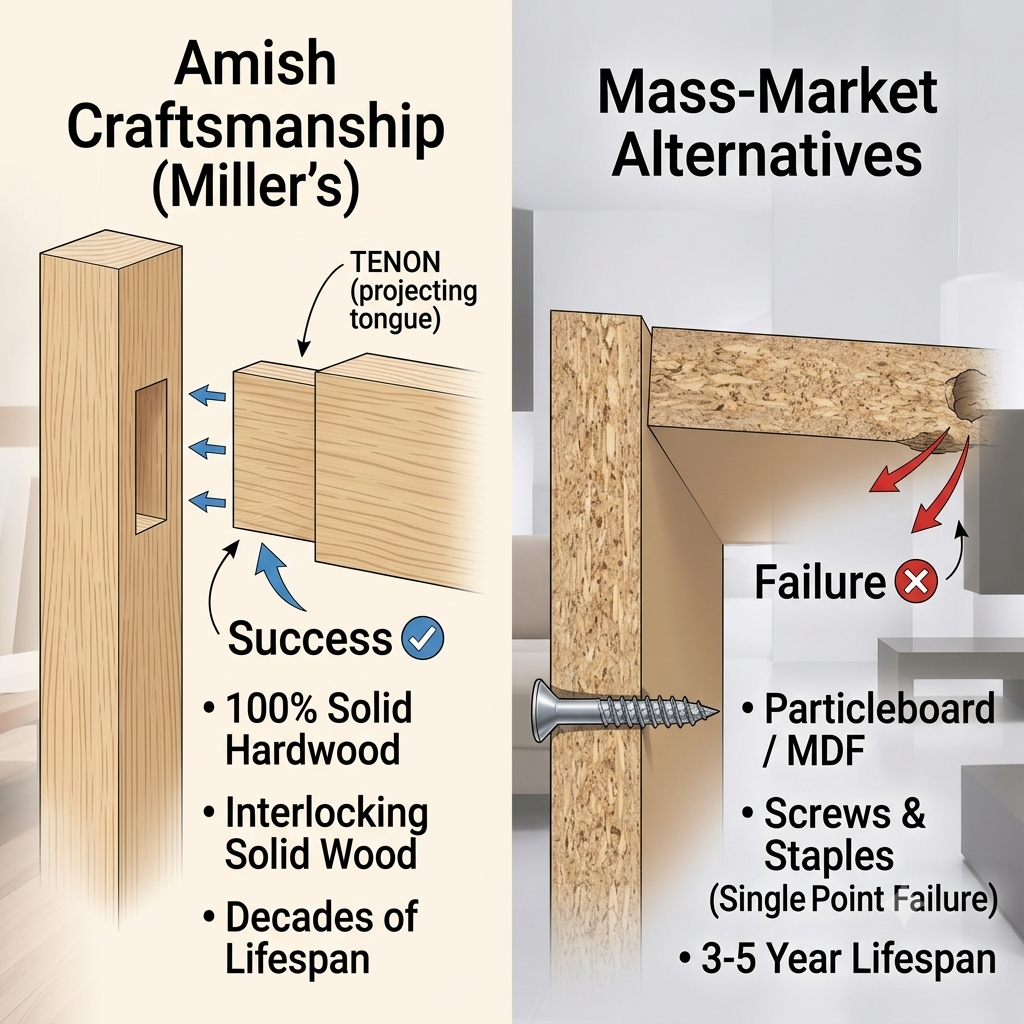
The Mortise: A pocket or hole carved into one piece of wood.
The Tenon: A projecting tongue carved onto the end of the adjoining piece, perfectly machined or hand-cut to fit the mortise.
Why It’s Stronger Than Screws:
Interlocking Solid Wood: Screws only hold a joint together at a single, narrow point of contact. A mortise-and-tenon joint distributes the weight and stress across a large, interlocking surface area of solid wood.
Grain-to-Grain Bonding: When coated with high-quality wood glue, the wood grains fuse together on a molecular level. The joint effectively becomes a single piece of wood.
No Mechanical Fatigue: Over time, heavy use causes screws to widen their holes in the wood, leading to wobbling and eventual failure. A mortise-and-tenon joint cannot widen or strip because the wood itself forms the structural lock.
What is the difference between English dovetail and French dovetail drawers?
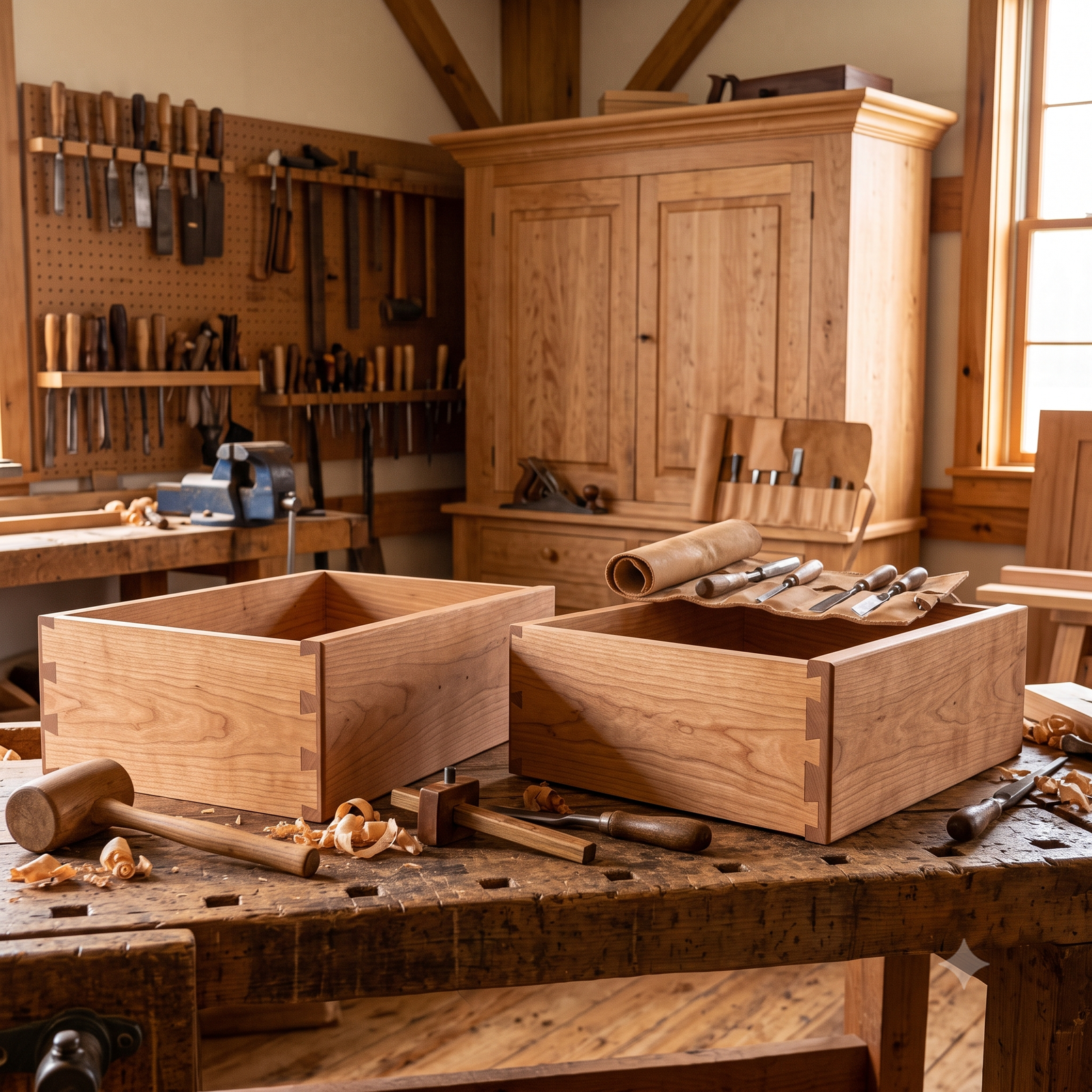
Both styles utilize interlocking, wedge-shaped fingers of wood, but they are engineered for different aesthetic and structural needs:
English Dovetails: These are visible on the outside corners of the drawer box. The interlocking “teeth” face forward and backward. This design maximizes the interior drawer space and is the hallmark of traditional, high-end Amish case goods.
French Dovetails: This style uses a single, concealed “male” channel cut into the drawer side that slides into a “female” groove in the drawer front. Because the joint is hidden from the front, French dovetails are ideal for drawers with curved, delicate, or heavily contoured fronts.
Why does Amish furniture bypass metal fasteners and brackets?
Amish craftsmen avoid metal fasteners like brackets, staples, and cheap screws for two primary reasons: longevity and materials science. Metal and wood are fundamentally incompatible over the long haul. Wood is organic and pliable, whereas metal is rigid. When a piece of furniture experiences daily stress, metal fasteners chew into the softer wood fibers, slowly stripping the connection from the inside out. Furthermore, metal can react with the natural tannins in hardwoods like oak or cherry, causing dark, discoloration over time. By using wood-to-wood joinery (like dowels, mortise-and-tenon, and dovetails), the entire piece moves, flexes, and ages at the exact same rate, ensuring the furniture lasts for generations.
How do wood expansion and contraction affect custom tabletop design?
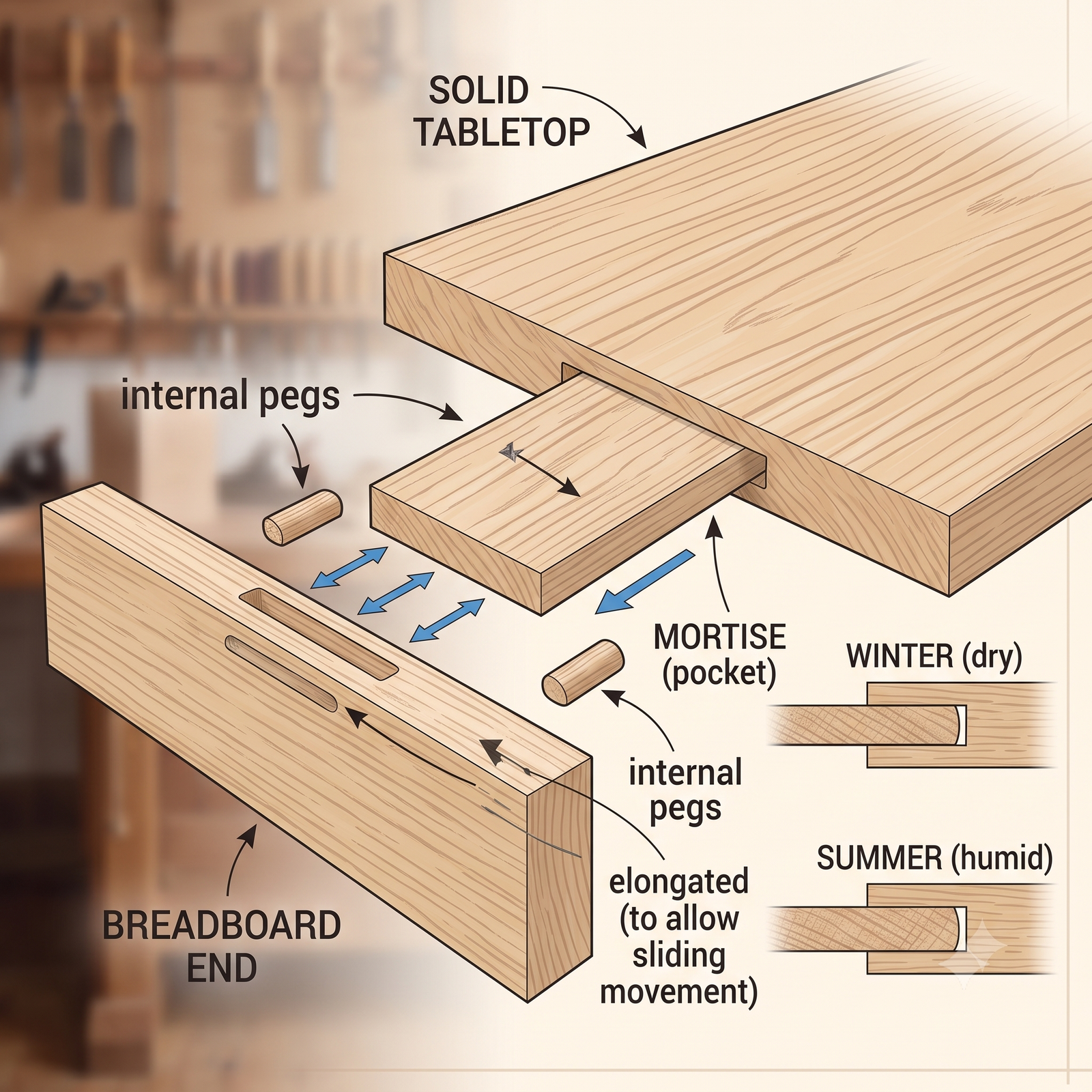
Wood is “hygroscopic,” meaning it acts like a sponge. It absorbs moisture and expands in high humidity (summer) and releases moisture and contracts in dry air (winter). Crucially, wood expands and contracts almost entirely across its grain, not along its length.
If a solid wood tabletop were rigidly glued or screwed down to a solid base across its grain, the wood would literally tear itself apart as it tried to move, resulting in warping, splitting, or cracking.
To prevent this, Amish craftsmen utilize brilliant design adaptations:
Z-Fasteners or Desktop Clips: The tabletop is attached to the base using hidden, flexible metal or wooden clips that sit in a groove. This allows the top to safely slide back and forth by a fraction of an inch as the seasons change.
Breadboard Ends: On many custom tables, the narrow ends feature a perpendicular board. This isn’t just for looks—it is attached using a modified mortise-and-tenon joint that allows the main tabletop to expand and contract inside the breadboard sleeve without pushing the ends out of alignment.
| Feature / Technique | Amish Craftsmanship (Miller’s) | Mass-Market Alternatives |
| Primary Joinery | Mortise-and-Tenon, Dovetails | Metal staples, glue blocks, pocket screws |
| Material Integrity | 100% Solid Hardwood (grows/flexes together) | Particleboard, MDF, thin veneers |
| Lifespan | Decades to generations (can be refinished) | 3–5 years (strips, sags, and strips out) |
| Climate Adaptation | Built-in expansion joints & breadboard ends | Rigidly glued/screwed (prone to splitting) |
FAQ
If Amish furniture avoids metal fasteners, are there never any screws or metal used in your pieces?
We use metal strategically where it makes engineering sense, but never as the primary structural joint holding the frame together. For example, high-quality metal slides are used on certain heavy-duty file drawers, and flexible metal “Z-clips” are often used to attach tabletops to bases so the wood can safely expand and contract. Rest assured, the core frame of your furniture relies entirely on interlocking wood-to-wood joinery.
How should I care for a table that has “living” wood-to-wood joinery?
Solid wood responds to its environment, the best care is maintaining a stable home environment.
Humidity: Try to keep your home’s relative humidity between 35% and 45%.
Temperature: Keep the furniture away from direct heat sources (radiators, fireplaces, or heating vents) which can localized-dry the wood and cause uneven contraction.
Cleaning: Dust with a soft, damp cloth, and avoid harsh chemical polishes or silicone-based sprays.
Does the wood expansion and contraction mean my custom table will warp over time?
No, quite the opposite! Wood will naturally move with the seasons, but because our craftsmen anticipate this, they build in breathing room using techniques like breadboard ends and desktop clips. Your table is engineered to expand and contract across its width without warping, splitting, or cracking.
Still have more questions?
Visit Our Three Ohio Amish Furniture Showrooms
We invite you to experience the texture, grain patterns, and structural integrity of our furniture firsthand by visiting one of our three landmark destination storefronts.
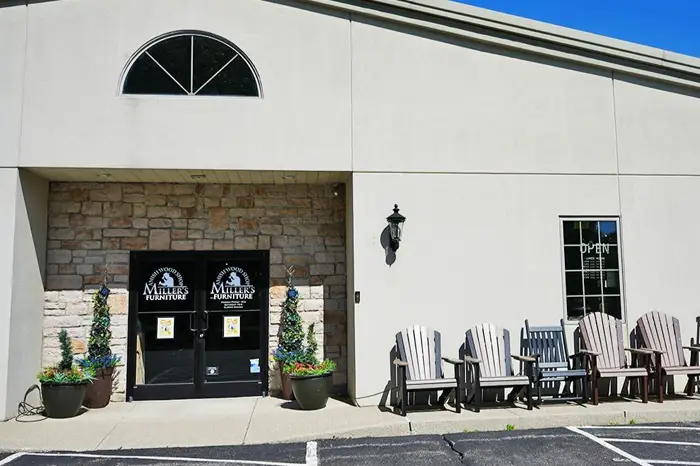
The Pataskala Showroom
Conveniently located just east of the Columbus I-270 bypass on York Road, our Pataskala location is the primary hub for shoppers searching for high-end custom furniture and Amish dining sets near Columbus.
📍 Pataskala Showroom:
4877 York Rd SW, Pataskala, OH 43062
Get Directions to Pataskala
📞 Phone: (740) 927-4090
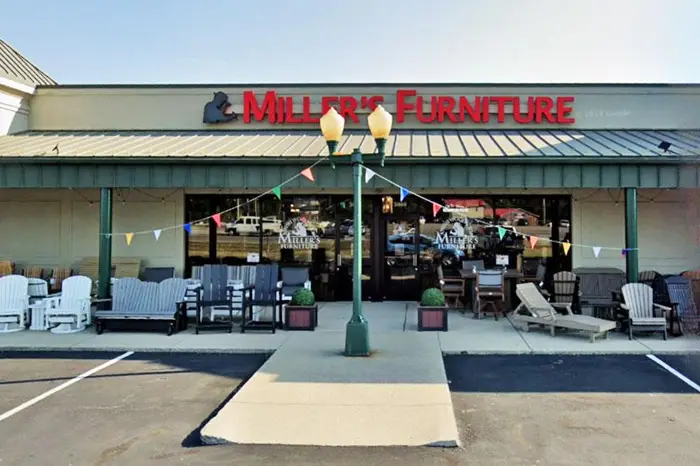
The Lancaster Showroom
Situated on Columbus-Lancaster Road, this expansive showroom features beautifully staged bedroom suites, office collections, and living room seating options designed to elevate your home.
📍 Lancaster Showroom:
3040 Columbus-Lancaster Rd NW, Lancaster, OH 43130
Get Directions to Lancaster
📞 Phone: (740) 654-6852
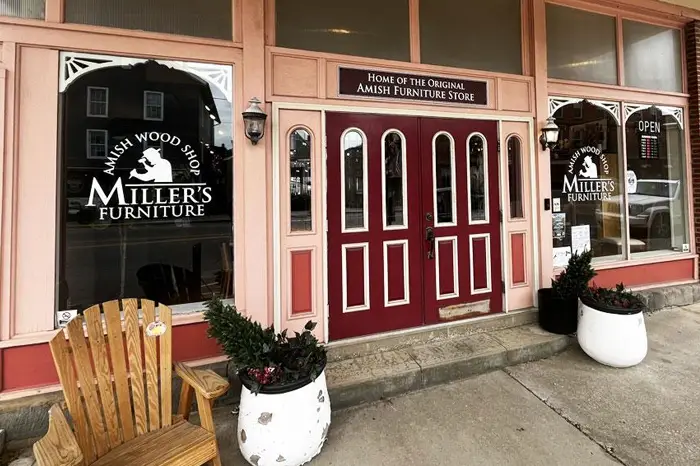
The Loudonville Showroom
Located on West Main Street right in the heart of Mohican country, our Loudonville storefront showcases rustic log furniture, traditional hardwoods, and heavy timber pieces alongside our core home decor lines.
📍 Loudonville Showroom:
268 W Main St, Loudonville, OH 44842
Get Directions to Loudonville
📞 Phone: (419) 994-5595